


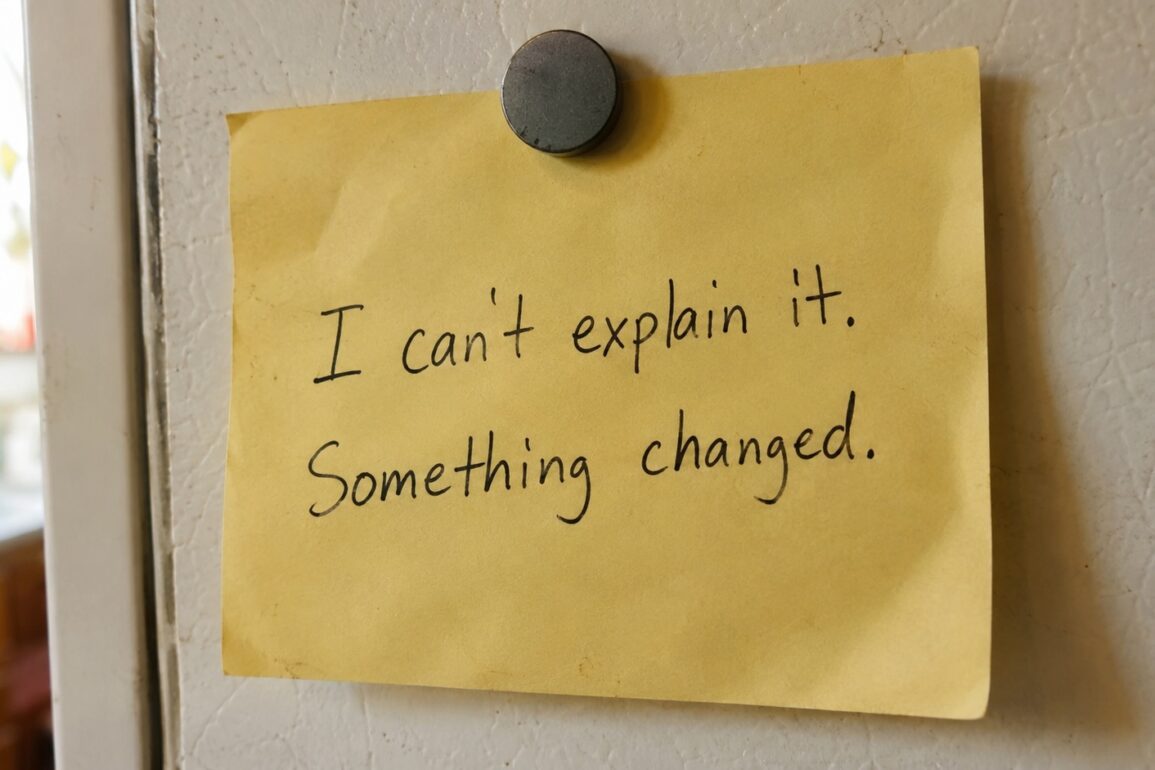
Most people recognize an important change only after it becomes obvious. The signs usually appear much earlier.
Have you ever looked back on a period of your life and realized the signs were there long before you noticed them?
Not obvious signs.
Small moments.
A conversation you couldn’t stop thinking about.
A growing impatience with something that used to feel normal.
A sudden loss of interest in something you once cared about.
A feeling that a chapter was ending, even though nothing around you appeared to be changing.
Most people ignore those moments.
They tell themselves they’re overthinking.
They’re tired.
They’re reading too much into things.
Life continues.
The routine stays the same.
Nothing dramatic happens.
Until one day something shifts.
A relationship ends.
An opportunity appears.
A decision finally gets made.
And suddenly they find themselves looking back at the previous weeks — or even months — with a strange realization:
The feeling arrived first.
That’s the part I find fascinating.
Because most people believe important changes begin when something obvious happens.
I’m no longer convinced that’s true.
The more stories I hear, the more convinced I become that important changes usually begin much earlier.
Not with certainty.
With small moments that feel oddly difficult to ignore.
A conversation that lingers longer than it should.
A question that keeps returning.
A restlessness that doesn’t go away.
A sense that something no longer fits, even when you can’t explain why.
Individually, those moments seem insignificant.
That’s why most people dismiss them.
But later, when the change becomes visible, they often seem connected.
As though something was trying to get your attention long before you had a name for it.
One of the reasons these moments are so easy to miss is that they rarely arrive looking important.
They usually look ordinary.
A person starts feeling restless and tells herself she’s just tired.
Someone begins losing interest in a goal they once cared about and assumes they’re unmotivated.
A conversation stays in the mind longer than expected, and it gets dismissed as overthinking.
We are surprisingly good at talking ourselves out of what we already know.
Especially when we don’t yet have enough proof to defend it.
That’s the strange thing about important changes.
The feeling often arrives long before the proof does.
And most people trust proof more than they trust themselves.
So they wait.
They wait for something obvious.
Something undeniable.
Something they can point to and say:
“There. That’s what changed.”
But life doesn’t always work that way.
Sometimes your attention shifts before your circumstances do.
Sometimes you begin outgrowing a chapter before the chapter has technically ended.
Sometimes something inside you starts moving before the outside world gives you permission to call it change.
That’s where many people become confused.
They assume certainty should arrive before change.
In reality, it often happens the other way around.
The change begins.
Then the signals appear.
Then the questions.
Then the growing sense that something is no longer fitting the way it used to.
Only later does the explanation arrive.
When people look back on major turning points, they often say the same thing:
“I knew something was happening.”
What they usually mean is:
“I felt something before I understood it.”
That distinction matters.
Because understanding tends to arrive at the end of the process.
The feeling often arrives at the beginning.
And the more stories I hear, the more convinced I become that many people spend months arguing with signals they eventually discover were right.
Not because the signals were obvious.
Because they weren’t.
That’s why they were ignored.
The surprising part is how often they were accurate anyway.
What makes these moments so interesting isn’t that they predict the future.
It’s that they often reveal what is already happening.
Most people think the signals are pointing toward what comes next.
I’m not sure that’s always true.
Sometimes they’re pointing toward a truth you’ve been slowly approaching for months.
A truth about what you want.
What no longer works.
What you’ve outgrown.
What you’ve been tolerating.
What you’ve been pretending not to know.
That’s why the signals often feel uncomfortable.
Not because they’re mysterious.
Because they’re familiar.
Somewhere inside, you’ve already met them before.
You’ve had the thought.
You’ve felt the restlessness.
You’ve noticed the shift.
You just haven’t fully trusted it yet.
I’ve noticed that when people finally reach a turning point, they often describe it as sudden.
They quit the job.
They leave the relationship.
They move.
They choose something new.
From the outside, it looks like a decision.
From the inside, it was usually a process.
A process that began much earlier than anyone realized.
That’s why hindsight can feel so strange.
Once the change becomes visible, people start remembering all the moments that came before it.
The conversations.
The feelings.
The questions.
The signals.
And they begin seeing a pattern that was almost impossible to see while they were living through it.
Not because the pattern wasn’t there.
Because patterns are easier to recognize once they have somewhere to lead.
Which raises an uncomfortable question.
If so many people only recognize these signals after everything becomes obvious…
How many are we overlooking right now?
How many moments are we dismissing simply because they haven’t explained themselves yet?
And how often does life try to get our attention long before we understand what it’s trying to say?
I’m not sure anyone knows the answer.
What I do know is this:
The people who later describe a turning point almost always remember the same thing.
Not the moment everything changed.
The moment they first felt it.
Maybe you’ve noticed more than you realize.
The signs rarely make sense while they’re happening.
Sometimes they only become clear when you see them together.